

While infrastructure becomes more flexible and dynamic, operations become more complex. Cloud environments change faster, require broader context, and depend on up-to-date knowledge to operate efficiently. Many teams and enterprises discover that their existing ITSM processes were never designed for this level of dynamism.
With Agentic AI for Operations, MobiLab is redefining how Cloud Operations scale in both speed and cost.
Tasks that once required multiple handovers can now be resolved in minutes. It also moves operational expertise from the heads of a few specialists to the system itself. It brings optimization continuously rather than through periodic, manual effort. Together, these changes reduce coordination overhead, lower resolution time variance, and remove structural inefficiencies that directly drive the operational cost.
What “Agentic” Means in Cloud Operations
In operations, Agentic AI means systems that can take responsibility for decisions and actions within clearly defined boundaries and delegated boundaries.
Agents are responsible for the full operational loop:
- Understanding intent
- Validating requests against policies and constraints
- Executing approved actions or escalating when required
- Documenting every step transparently
Instead of humans stitching together context under time pressure, that logic is embedded directly into the operational fabric while accountability for outcomes remains with the organization that defines those boundaries.
From Manual Coordination to Governed Execution
Most Cloud Operations follow similar patterns: provisioning resources, applying standards, handling incidents, and optimizing environments. These are straight forward tasks. These tasks are conceptually well understood, but execution depends heavily on coordination across roles and systems. From MobiLab’s experience, what slows teams down is not lack of knowledge, but coordination.
Initial requests are often incomplete or unclear. Ownership of knowledge is fragmented across teams. As a result, tickets bounce between roles, clarification cycles grow longer, and resolution depends heavily on a small number of experts who understand the full context.
Traditional ITSM systems struggle in this area because they rely on humans to interpret intent, enrich context, and determine the next course of action, resulting in extended time from request or incident to resolution, making operational throughput difficult to scale predictably.
Agentic AI for Operations turns operational knowledge into automatable execution. Policies, approvals, and escalation paths are encoded into the system, allowing actions to happen consistently and early. As a result, speed improves naturally, not by bypassing governance, but by making it explicit.
This is where speed and control stop being opposites. Clear boundaries allow systems to move faster with confidence.
From Intent to Outcome
One of the most visible shifts in an agentic operating model is how requests are made.
Instead of navigating tickets and forms, users express intent. A request for a new virtual machine, for example, submitted via ServiceNow, is interpreted, validated, and executed by agents. Security controls and policies are applied automatically, the action is logged in the ITSM system, and any request outside approved boundaries is escalated.
What changes is not just speed, but user experience. What once took hours now takes minutes without shortcuts or loss of oversight. In practice, this approach reduces back-and-forth clarification and shortens the path from initial request to resolution.
Proactive and Self-Healing Operations
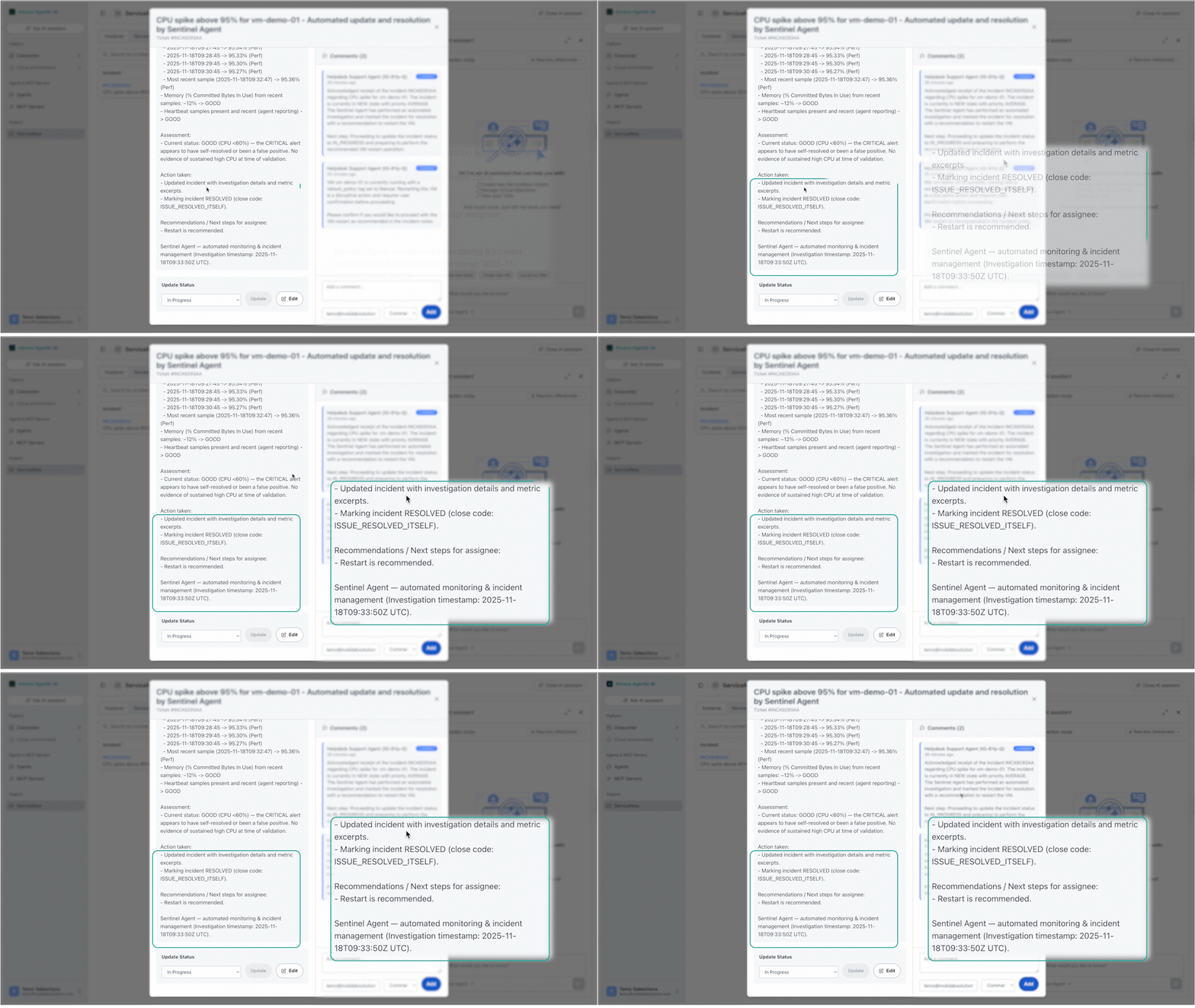
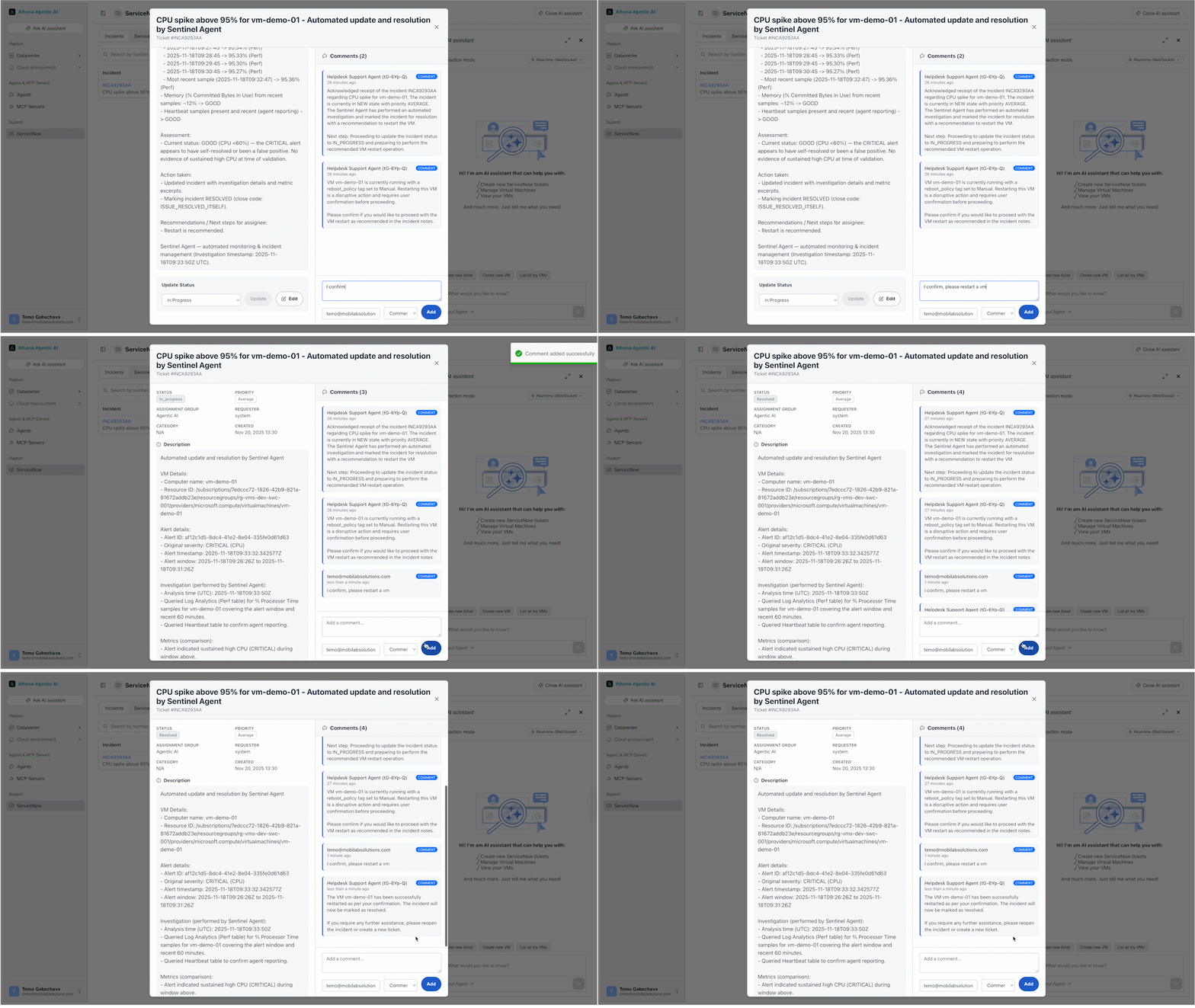
As agents continuously reason over telemetry and system state, operations become more proactive. Performance anomalies are identified earlier, incidents are created with context rather than raw alerts, and remediation steps are proposed clearly and transparently.
Self-healing becomes possible, where risk and impact are well understood. Agents recommend actions, authorized users approve them, and execution happens in a predictable, observable way. Reliability improves, and operational pressure decreases.
The Compound Impact on Cost and Scale
Over time, the effects of Agentic AI for Operations compound:
- Manual interventions decrease
- Infrastructure usage becomes more efficient
- Response times improve consistently
- Reliance on scarce experts is reduced
Across customer environments with high volumes of repetitive, well-patterned operational work, this translates into the removal of up to 80% of repetitive operational work, allowing experts to focus on architecture, optimization, and innovation rather than routine execution.
With agents continuously enforcing standards and identifying optimization opportunities, cost reduction becomes proactive instead of reactive. These gains reinforce each other, creating a more scalable and predictable operating model.
What MobiLab Did to Make Agentic Operations Work
At MobiLab, making Agentic AI for Operations work in real Cloud environments required more than adding a chat interface or a large model. It meant turning operational expertise into engineered systems.
Several design choices were critical:
- Building purpose-specific agents – a multi-agent system on Azure – instead of general assistants
- Encoding role-based access control, approvals, and escalation by default
- Integrating deeply with ITSM tools to ensure visibility and auditability
- Using intelligent model selection to balance reasoning capability with cost
This approach ensures that agents act within clearly defined boundaries and that every action remains secure, transparent, and governed.
Designing Operations for Responsible Autonomy
Agentic AI for Operations enables organizations to operate Cloud environments with the speed modern business expects and the control enterprises require.
The advantage does not come from removing humans from operations. It comes from building systems that make the right decisions at the right time by design and allowing people to focus on direction, improvement, and innovation.
As Cloud environments continue to grow in complexity, this shift from manual coordination to governed autonomy is becoming less of an experiment and more of a necessity.